
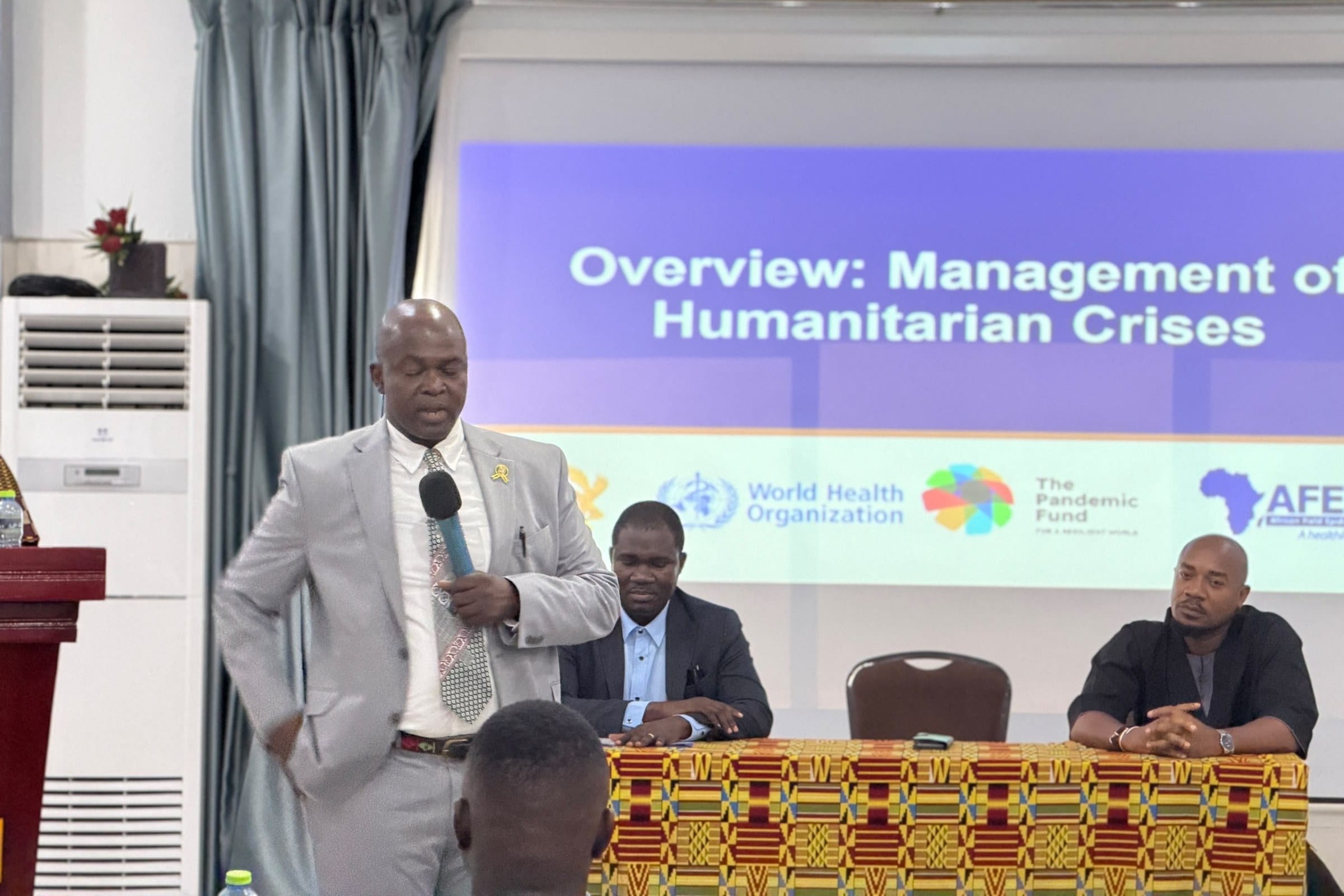
Ghana's Ministry of Health and the African Field Epidemiology Network (AFENET) trained 86 responders in the management of humanitarian crises at Erata Hotel, Accra. Cohorts 1 and 2 ran concurrently from 19 to 23 October 2026, followed by cohorts 3 and 4 from 26 to 30 October, with 17, 21, 25 and 23 participants, respectively.
Dr. Samuel Kaba Akoriyea, Director-General of the Ghana Health Service, officially opened the programme. He highlighted the role of training in helping different agencies coordinate their response, protect affected communities and sustain essential services during a crisis.
Participants came from national, regional and municipal institutions in public health, animal and environmental health, disaster management, the security services, social welfare, civic education and peacebuilding, together with international partners. The 11-module course covered coordination, rapid needs assessment, disease surveillance, surveys and sampling, logistics, water and sanitation, risk communication, case management and psychosocial support. A Greater Accra case study linked the modules through scenarios of flooding, displacement, cholera, suspected mpox and rabies, in which groups decided which needs to assess first, what information to share and which agency should lead each task.
Participants and facilitators asked for more time on survey calculations and logistics, more simulation exercises and stronger coverage of disability inclusion and gender. Trainees agreed to share the course tools within their organisations and apply them to local preparedness plans.
This activity was funded by the Pandemic Fund through the World Health Organization.
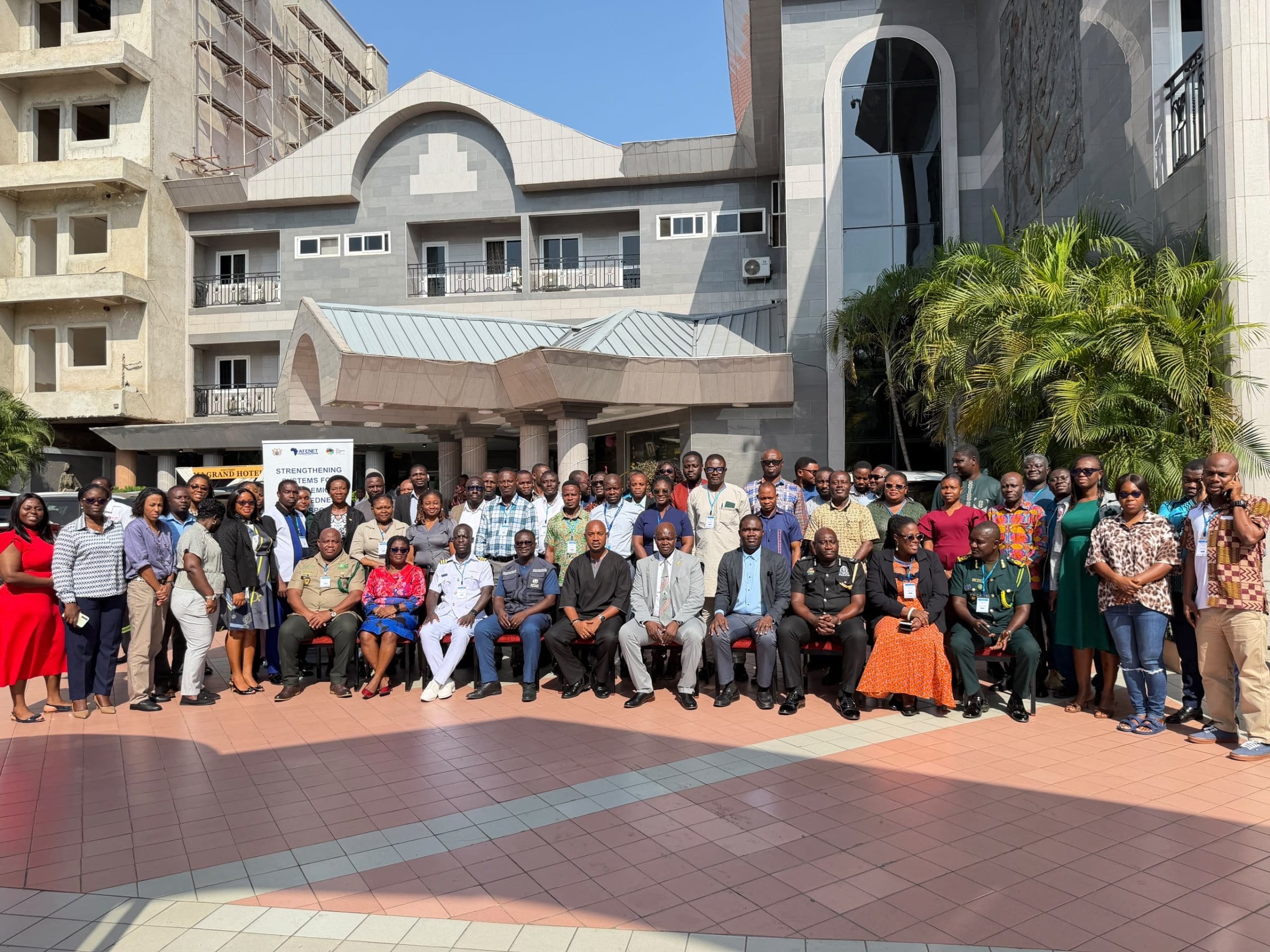
Section of stakeholders, participants and facilitators at the Training