
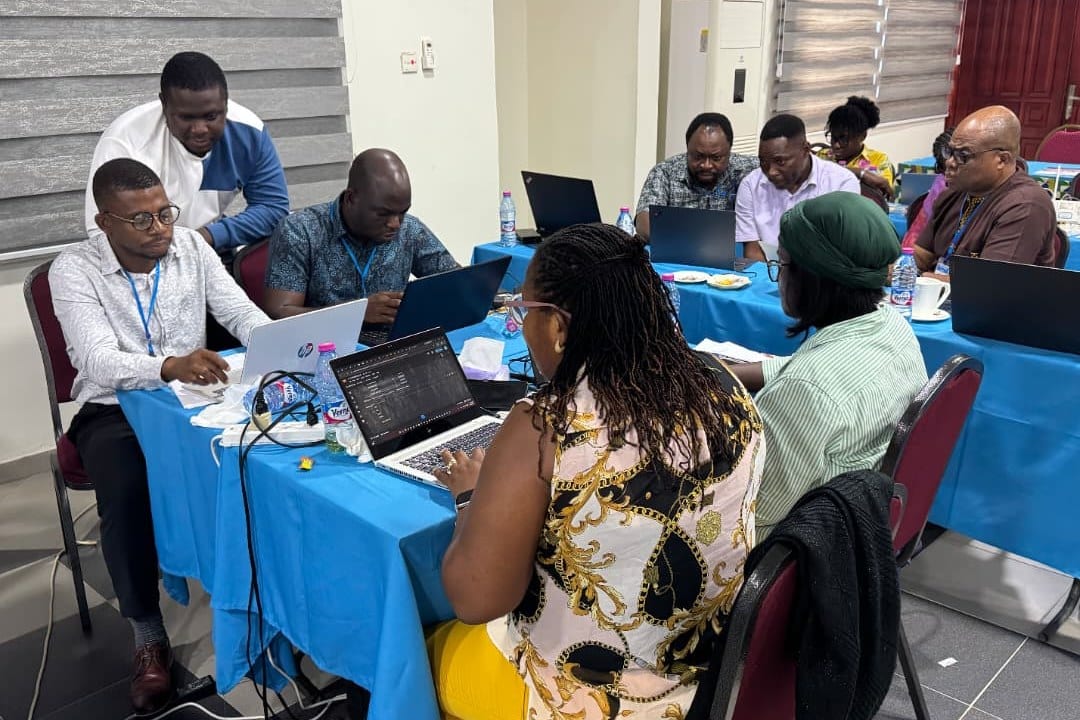
The African Field Epidemiology Network (AFENET) trained 32 officers from all 16 regions of Ghana in health informatics and the use of artificial intelligence (AI) in public health surveillance. The course ran from 24 to 28 August 2026 at Erata Hotel, Accra, in two concurrent cohorts of 16, and included 16 health information officers, 12 disease control officers and four public health officers.
In his welcome address, Prof. Ernest Kenu, Director of AFENET Ghana, urged officers to apply epidemiological reasoning when using AI and to check its outputs before acting on them. Dr. James Sarkodie, senior technical advisor at Jhpiego, asked participants to keep asking themselves “So what?” as they considered how to use the new skills in their daily work.
All 32 officers completed the pre-test, daily quizzes, post-test and course evaluation. Mean scores rose from 67.7% to 86.0% in cohort 1 and from 70.6% to 86.7% in cohort 2.
Both cohorts followed the same curriculum on surveillance information systems, data governance, interoperability, data management and visualisation. Officers worked in Google Colab with Python, used AI assistance during guided analyses and learned to check AI outputs before drawing conclusions. In the capstone exercise, they examined a simulated cholera surveillance dataset with built-in data quality and geographic errors, then explained what their findings would mean for a response.
Officers asked for more hands-on time and further support with Python, interoperability and troubleshooting AI-generated code. Facilitators proposed follow-up mentoring and a reassessment eight to twelve weeks after the course to check whether officers retain and apply the skills in routine surveillance.
This activity was supported by the U.S. Centers for Disease Control and Prevention (U.S. CDC) in collaboration with Jhpiego.
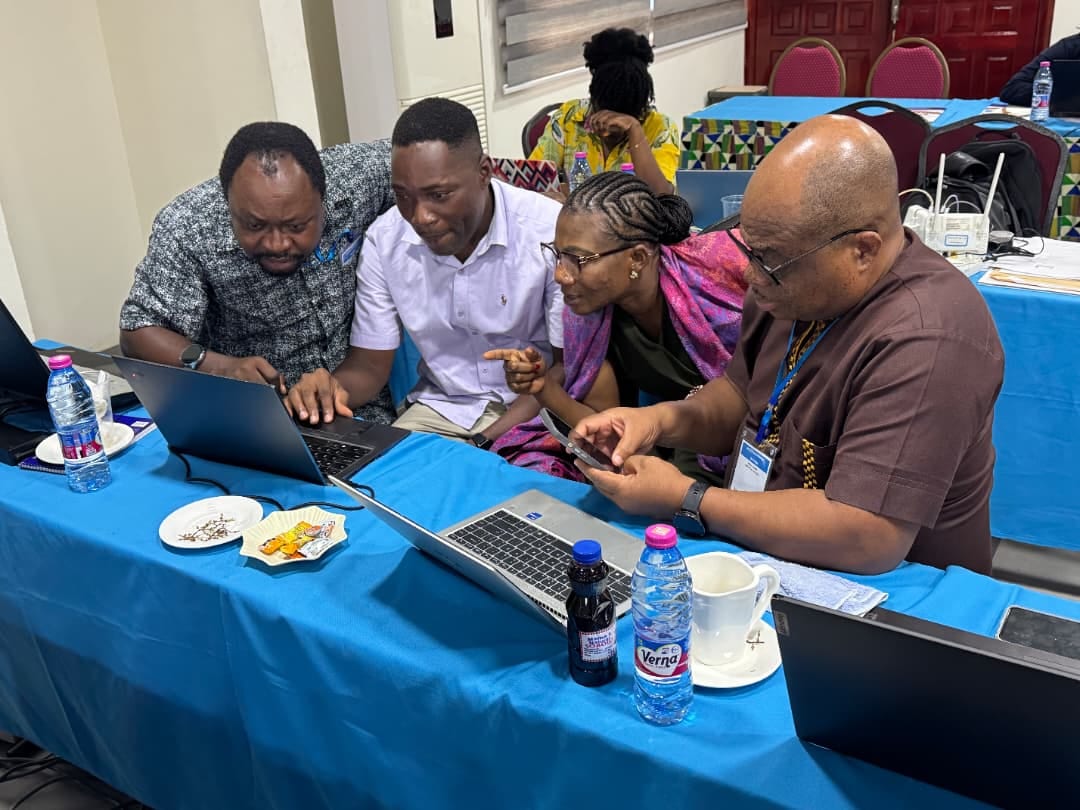
Officers applying informatics and AI tools during a group exercise.