
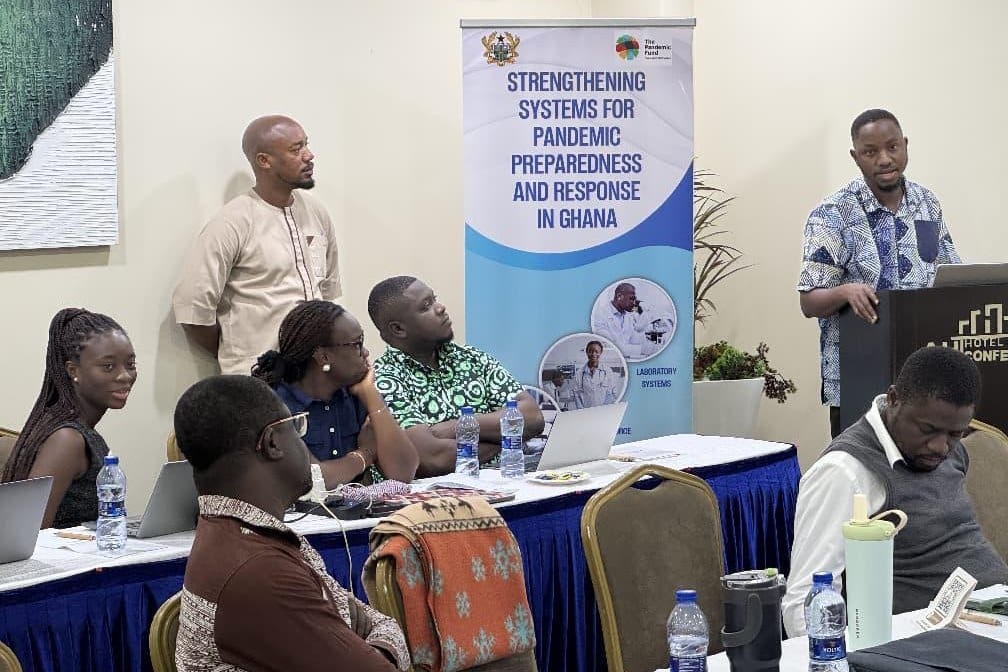
The University of Ghana School of Public Health (UGSPH) convened 22 project staff and technical reviewers at AH Hotel, East Legon, Accra, on 29 and 30 September 2026 to validate its training package on advanced spatial epidemiology and artificial intelligence (AI)-assisted predictive modelling.
At the opening session, Prof. Ernest Kenu, head of the Department of Epidemiology and Disease Control at UGSPH, asked reviewers from each sector to check whether officers could use the materials in their routine work. He encouraged the team to document how the package was developed and validated so others could learn from the process.
Reviewers assessed the draft modules for technical accuracy, coherence and fit with public health practice. They regrouped the eight modules into four integrated teaching blocks and cut the working manual from about 260 to 92 pages, keeping the detailed material as reference resources. The shorter manual frees time for guided walkthroughs and hands-on exercises.
AI assistance now runs through the whole analysis, from data preparation to modelling and interpretation. Reviewers agreed that learners must understand AI-generated code before using it, document decisions about questionable records and test model predictions against suitable comparison data. Guided notebooks will let officers practise both conventional coding and AI-assisted approaches.
Reviewers recommended a baseline assessment, hands-on exercises, a capstone task and follow-up with trainees during their first three months back at work. Remaining tasks include finalising the notebooks and sending participants software and setup instructions before the course.
This activity was funded by the Pandemic Fund through the World Health Organization.
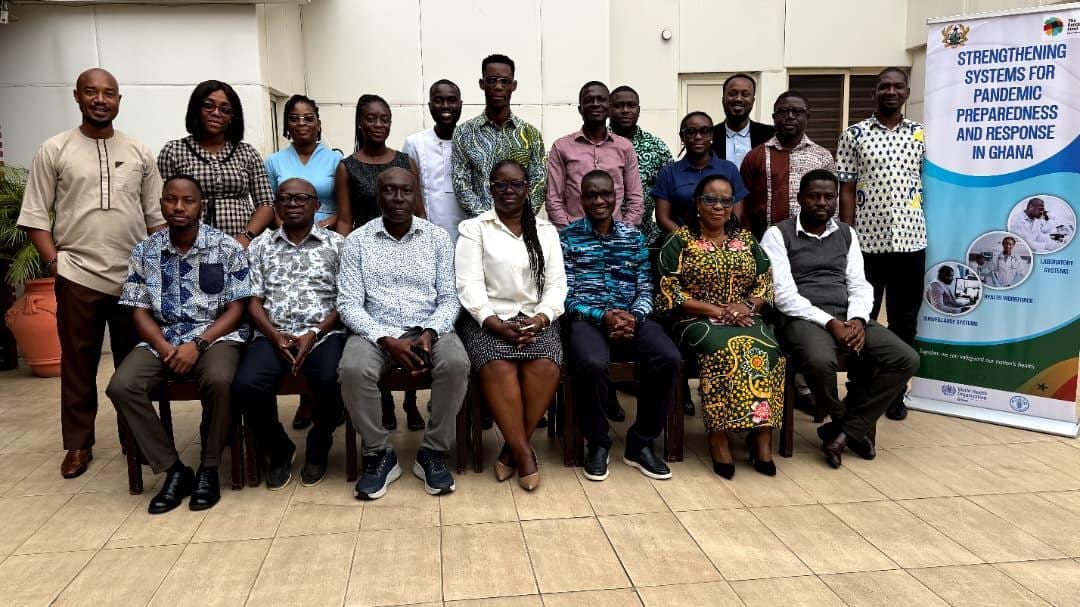
Section of participants at the validation Meeting