Stakeholders Review Public Health Emergency Operations Centers (PHEOC) Handbook
-
by
afenetghana
- No Comments on Stakeholders Review Public Health Emergency Operations Centers (PHEOC) Handbook
Public Health Emergency Operations Centres (PHEOCs) play a vital role in coordinating preparedness and response activities during public health emergencies, providing a structured platform for information sharing, decision-making, and resource mobilisation. To harmonise PHEOC operations nationwide, the Ministry of Health and the Ghana Health Service (GHS), in collaboration with national stakeholders and international partners, are developing a national PHEOC handbook. This handbook is intended to serve as a unified reference document to standardise procedures, strengthen incident management, and enhance the country’s overall emergency response capacity.
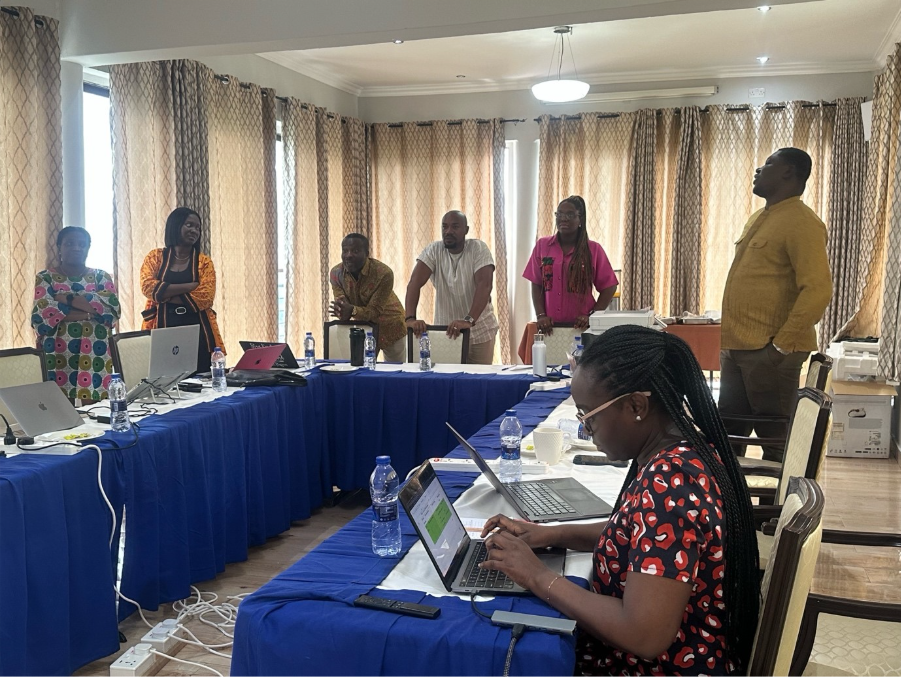
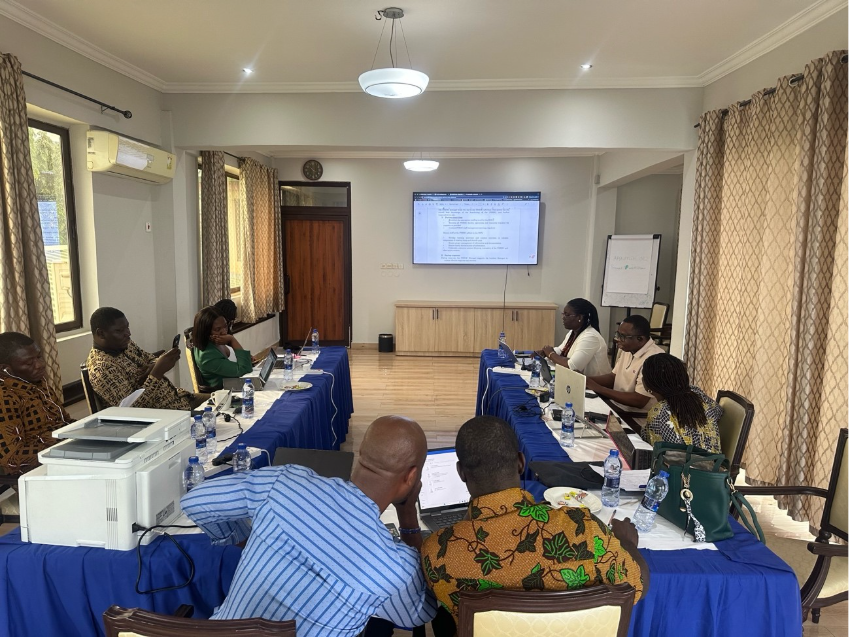
A four-day residential meeting was convened from August 19 to 22, 2025, at the Hephzibah Christian Centre in Aburi to conduct an in-depth review of the draft handbook. The objective of the meeting was to refine the draft, ensure alignment with national policies, international guidelines, and global best practices, and validate its relevance to Ghana’s public health landscape and emerging threats. This activity was supported by the Korea International Cooperation Agency through the US Centers for Disease Control and Prevention, in collaboration with AFENET, as part of the Global Health Security Phase II Project.
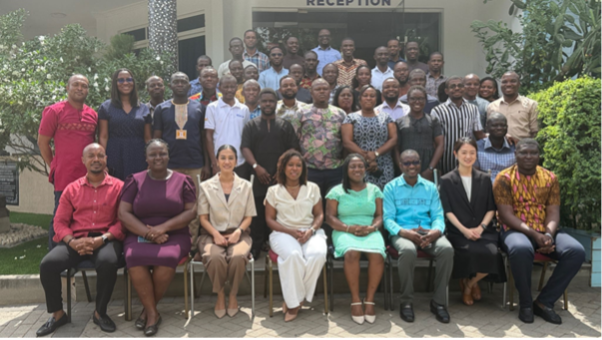
Twelve subject-matter experts from the Ghana Health Service (GHS), the African Field Epidemiology Network (AFENET), and the U.S. Centres for Disease Control and Prevention (CDC) participated in the review. Working in five groups, reviewers were assigned specific chapters for detailed assessment and revision. At the end of each day, revised sections were presented and discussed in plenary to ensure consistency, accuracy, and consensus across the document.
The review introduced structural and operational enhancements to the draft PHEOC handbook, including clearer definitions, stronger legal and policy foundations, and alignment with national systems such as the Integrated Disease Surveillance and Response (IDSR). It significantly strengthened operational readiness by refining IMS roles and activation levels, expanding ICT infrastructure standards, integrating COOP planning, and reinforcing data protection, ethical practices, and multisectoral coordination. Additionally, the revisions enhanced preparedness, response, and accountability through improved SOPs, advanced information management processes, comprehensive M&E frameworks, and the integration of gender, community engagement, climate considerations, and mental health support across all chapters.
The successful review process was driven by the strong commitment and expertise of all participants, resulting in a thoroughly revised draft that aligns with national expectations and international standards. This exercise marks an important milestone toward finalising a practical and user-friendly PHEOC handbook that will enhance Ghana’s capacity to manage public health emergencies effectively.
Immediate next steps include drafting the outstanding sections, specifically the Executive Summary, Acknowledgements, and List of Abbreviations, and assigning a sub-team to conduct a final proofreading of the complete handbook and compile all annexes before publication.